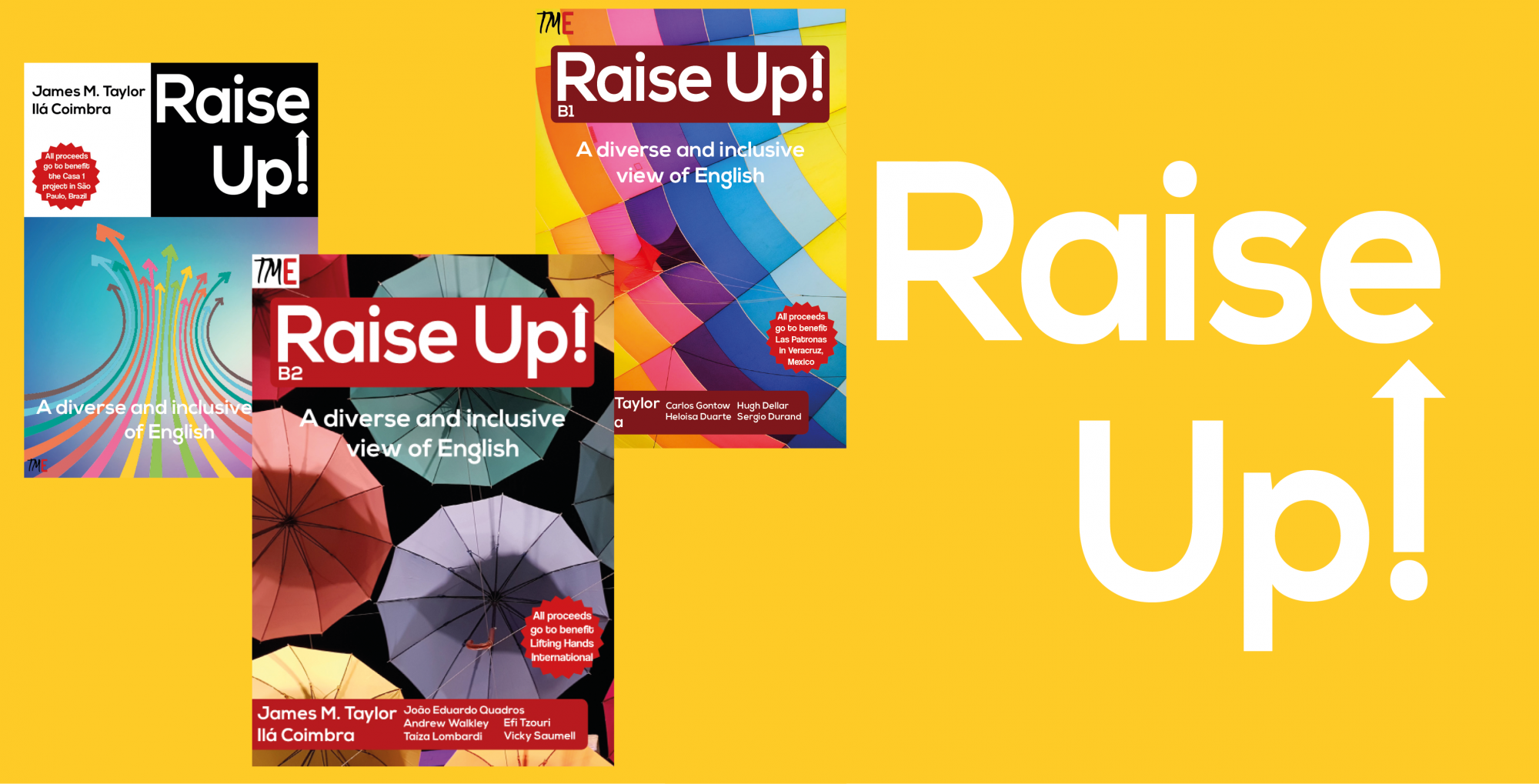
We publish mainstream ELT coursebooks with a difference. Ours are inclusive and diverse, with lessons which include a range of social groups that are rarely, if ever, seen, or stereotyped in ELT materials.
Book 1

The book contains 8 separate lessons, aimed at different levels, which follow the familiar format of modern international English language coursebooks. What makes Raise Up! different are the subjects of those lessons. The themes covered are:
- Family / LGBTQIA+
- Leadership / Disabled people & poverty
- Work rules / Low-paid workers
- Rural life
- Influences / women
- Work / Transgender
- Texting / Refugees
- Different types of homes
All proceeds from this book go to Casa 1 in São Paulo, Brazil.
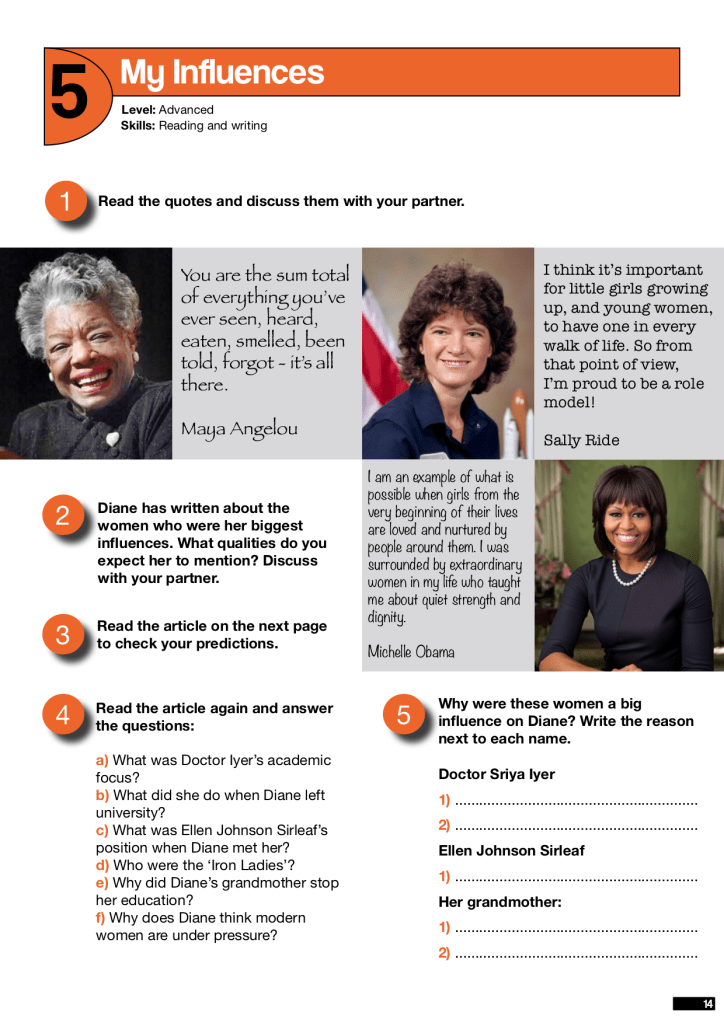
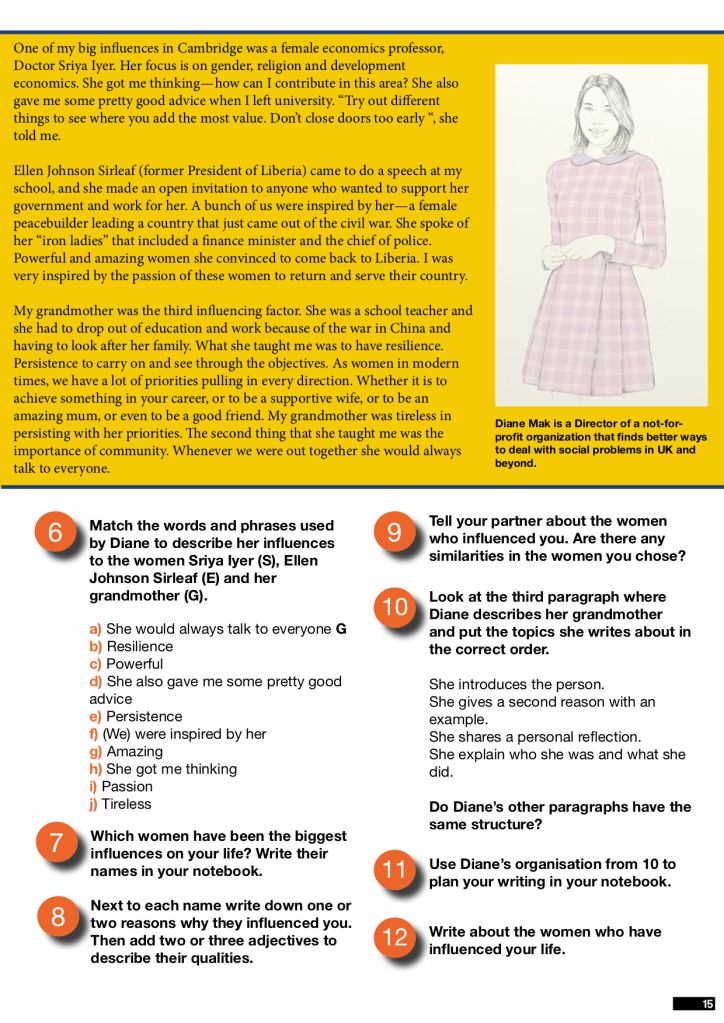
A lesson from book 1:
Book 2 – B1
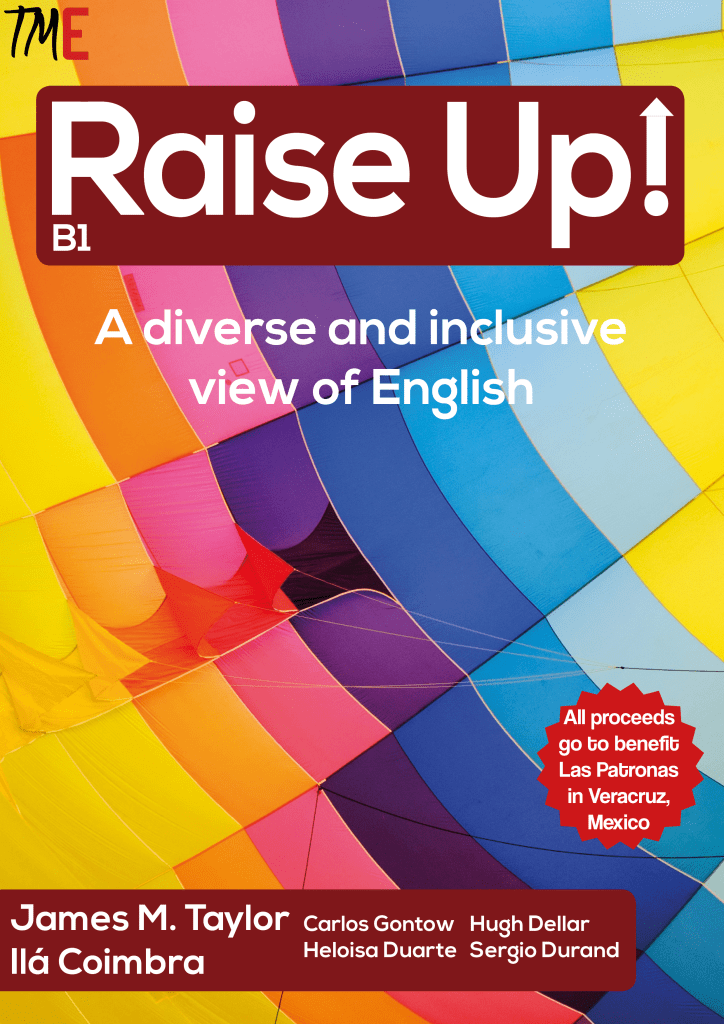
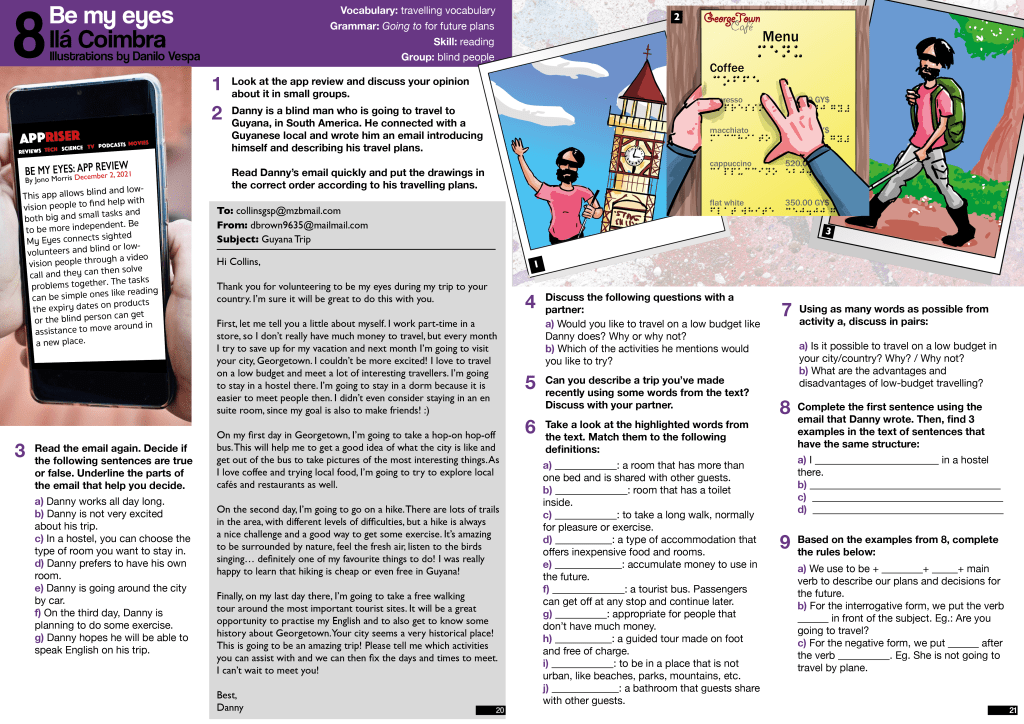
In this book, aimed at B1 level students, four of the lessons have been written by Raise Up! co-founder Ilá Coimbra. These look at indigenous traditions, global English, body types, mental and physical wellbeing, and travel for blind people. We also, for the first time, have four guest writers: Hugh Dellar on working class culture, Heloisa Duarte on elderly people, travel and social media, Carlos Gontow on diverse families, and Sergio Durand on attitudes to immigrants. Extensive teachers notes are included.
The lessons have been edited by Raise Up co-founder James M. Taylor, with Luiz Otavio Barros, Ceri Jones, Karen Ohara, and Hugh Dellar. The lessons have been beautifully illustrated by Danilo Vespa and Cleber Santos.
A lesson from book 2:
All the proceeds from our second book go to Las Patronas in Amatlán de los Reyes, Mexico. Find out more about them here.
Book 3 – B2

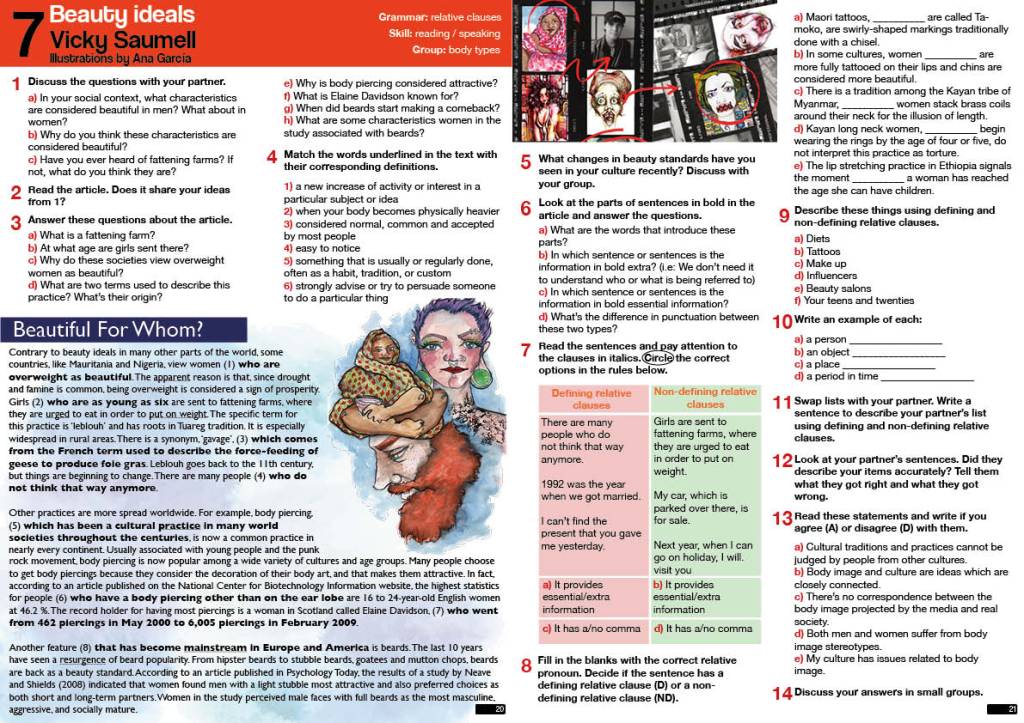
The third book is the Raise Up! series is aimed at B2 (intermediate) learners. It has 8 lessons written by a diverse team of writers, editors and illustrators: Andrew Walkley on sport and fitness, Efi Tzouri on life in a refugee camp, João Eduardo Quadros on the life of a driver and low-paid workers, Taíza Lombardi on elderly people, accomplishments and life experience and Vicky Saumell on beauty ideals and body types. Three of the lessons have been written by Raise Up! co-founders Ilá Coimbra and James M. Taylor. Ilá’s lessons look at black women’s inventions and on African religions whereas James’s is on a legendary drummer who is black and disabled.
Each lesson is beautifully illustrated, and for the first time, there are two listening lessons. The mp3s and transcripts for students are included, as well as extensive teacher’s notes containing answers, teaching suggestions and resources.
A lesson from book 3:
All proceeds from this book go to Lifting Hands International, an impact-focused nonprofit organization dedicated to providing clear and meaningful ways for you, your family, and your community to help refugees at home and abroad.
Book 4 – A1
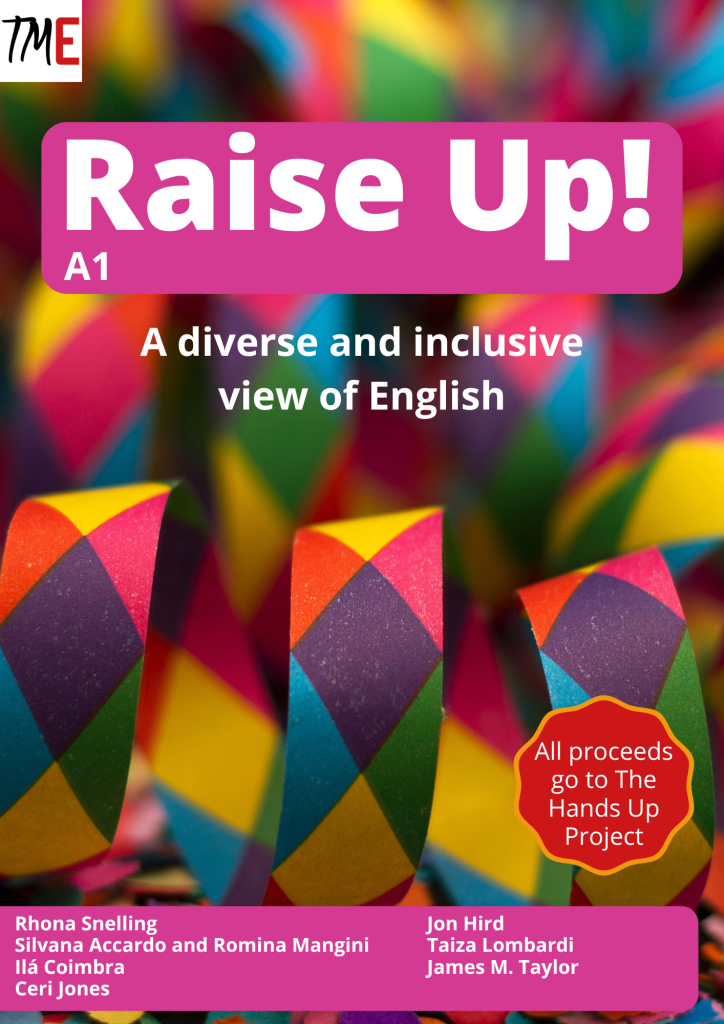
This is the fourth book in the Raise Up! project and it has 8 lessons for A1 (beginner) level written by a diverse team of writers, editors and illustrators.
We had the privilege to work with five guest writers in this edition: Rhona Snelling on refugee life, Silvana Accardo and Romina Mangini on science, Ceri Jones on accessibilty, and John Hird on personal preferences. Four of the lessons have been written by Raise Up! organisers Ilá Coimbra, Taiza Lombardi, and James M. Taylor.
Each lesson is beautifully illustrated, and there are two listening lessons. The mp3s and transcripts for students are included, as well as extensive teacher’s notes containing answers, teaching suggestions and resources.
A sample lesson from the A1 book:

All proceeds from this book go to The Hands Up Project. The project is committed to social justice, global citizenship, and freedom of expression, and upholds the belief that language learning is enhanced through creativity, performance and collaborative interaction. To these ends, the project affords opportunities for children in difficult circumstances, such as Palestine, to use English to communicate with one another across borders in a “spirit of peace, dignity, tolerance, freedom, equality and solidarity.” UN Convention on the Rights of the Child, 1989.
We are proud to partner with them to support their invaluable work.
 Raise Up! - A Diverse And Inclusive View Of English Language Teaching